
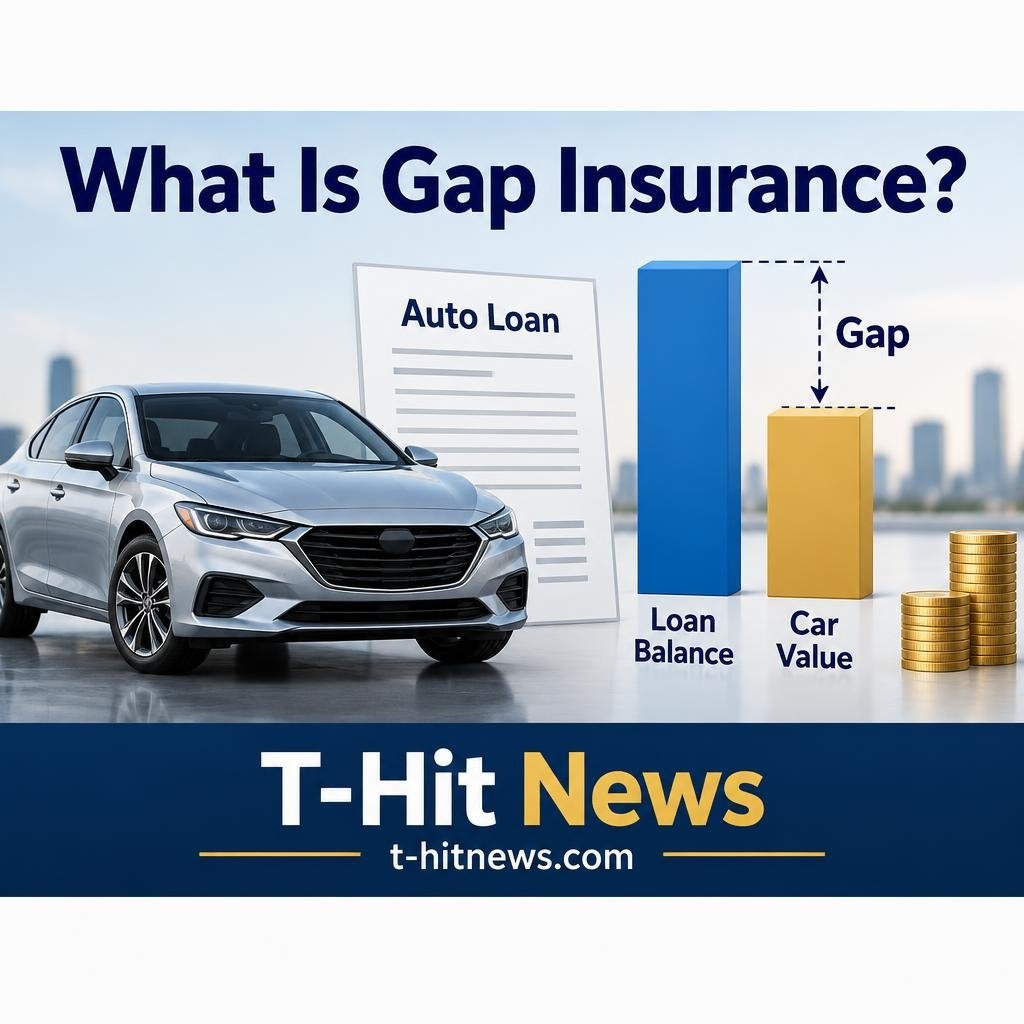
What is gap insurance? It is an optional add-on that pays the difference between what you still owe on a car loan or lease and what your regular insurer pays if the car is totaled or stolen. In many cases that difference is thousands of dollars, and gap insurance exists so you do not have to pay it from your own pocket.
Because dealers often sell it with a big markup, it helps to understand exactly what you are buying before you sign. This guide explains how it works, what it covers, who needs it, what it costs, and where to buy it for less.
What Is Gap Insurance? How It Works
A new car loses value fast. Meanwhile, your loan balance drops slowly, especially in the first years. If the car is totaled or stolen, your regular auto insurance generally pays only the car’s current market value, not the amount you still owe. According to the Consumer Financial Protection Bureau, standard auto insurance pays up to the value of your vehicle, and gap coverage is meant to cover the loss when your loan balance is higher than that value.
Here is a simple example with illustrative numbers:
| Item | Amount |
|---|---|
| Loan balance you still owe | $26,500 |
| Car’s market value when it is totaled | $22,000 |
| Your regular insurer pays (before deductible) | $22,000 |
| The “gap” you would owe without gap insurance | $4,500 |
With gap insurance, the gap policy pays that $4,500 difference, subject to its terms. Without it, you would still owe the lender, and you would have no car.
What Gap Insurance Covers
- The difference between your loan or lease balance and the car’s value after a total loss.
- Total loss from an accident, theft, or in some cases other covered events, as long as your main policy pays the claim.
- Both loans and leases, although some leases already include gap coverage in the contract.
What Gap Insurance Does Not Cover
- Repairs, medical bills, or injuries. It only deals with the loan gap.
- Your regular deductible, in many policies. Some gap policies include it, so check the wording.
- Missed payments, late fees, or extras you rolled into the loan, such as an extended warranty, in many cases.
- Damage that your main insurer refuses to pay for. Gap usually follows the main claim.
Who Needs Gap Insurance
Gap insurance is most useful when you owe more than the car is worth. That often happens in these situations:
- You paid a small down payment, often less than 20%.
- Your loan is long, such as 60, 72, or 84 months.
- You rolled an old loan balance into the new loan.
- You bought a car that loses value quickly.
- You are leasing, since lease payments are often close to the car’s value for a long time.
Who Can Skip Gap Insurance
You can probably skip it if you made a large down payment, your loan is short, you already owe less than the car is worth, or you have paid the car off. It is also less useful on an older car whose value has already dropped a lot, because the gap is usually small. A quick way to check: compare your loan balance with the car’s current value on a trusted pricing site. If the balance is lower, you have no gap.
How Much Does Gap Insurance Cost?
Prices vary a lot. Dealers often charge a flat fee of several hundred dollars, sometimes more than $1,000, and roll it into the loan. That means you pay interest on it for years. The CFPB also notes that financing gap coverage adds to your total loan amount and the total interest you pay. Your own auto insurer may offer gap coverage as a small add-on to your policy, which is often cheaper. Understanding how interest rates work shows why a financed add-on costs more than its sticker price.
Where to Buy Gap Insurance
- Your auto insurer: often the cheapest option, and it is easy to add or remove.
- Your lender or credit union: sometimes offers a fair price. Compare before you buy.
- The car dealer: convenient, but usually the most expensive. You can decline it.
Is Gap Insurance Required?
Usually no. The CFPB explains that extended warranties, gap insurance, and credit insurance are generally optional with an auto loan. If a dealer says it is required, ask them to show you where the sales contract says so. If it does not, you cannot be forced to buy it. Leases are different, because many leasing companies require gap coverage, or include it in the lease price.
How to Cancel Gap Insurance and Get a Refund
You can often cancel gap insurance during the loan, and you may get a partial refund if you pay off the car early, sell it, or refinance. Contact the seller or provider, ask for the cancellation form, and keep a copy. If you bought it from the dealer and rolled it into your loan, ask the lender how the refund will be applied.
Quick Checklist Before You Buy
- Find out how much you owe and what the car is worth today.
- Ask for the total price of gap coverage, not only the monthly cost.
- Get a quote from your own insurer and compare.
- Read what the policy covers, including the deductible and any loan limits.
- Decide whether you can afford to cover the gap yourself if the worst happens.
Gap insurance is one of several optional protections around car and home ownership. If you are comparing others, see our guides on how home insurance works, whether renters insurance is worth it, and what umbrella insurance is.
Frequently Asked Questions
Does gap insurance cover my deductible?
Some policies do and many do not. Read the policy, because this changes the real value of the coverage.
Can I buy gap insurance after I buy the car?
Often yes, but there may be time limits or eligibility rules, such as the car’s age. Ask your insurer or lender.
Is gap insurance worth it?
It is worth it when your loan balance is higher than the car’s value and you could not easily pay the difference. It is usually not worth it when you owe less than the car is worth.
How long should I keep gap insurance?
Only until your loan balance is lower than the car’s value. After that, consider cancelling to save money.
Disclaimer: This article is for general information only and is not insurance, legal, or financial advice. Policies, prices, and rules differ by provider and location, so read your contract and ask your insurer or lender before you decide.