

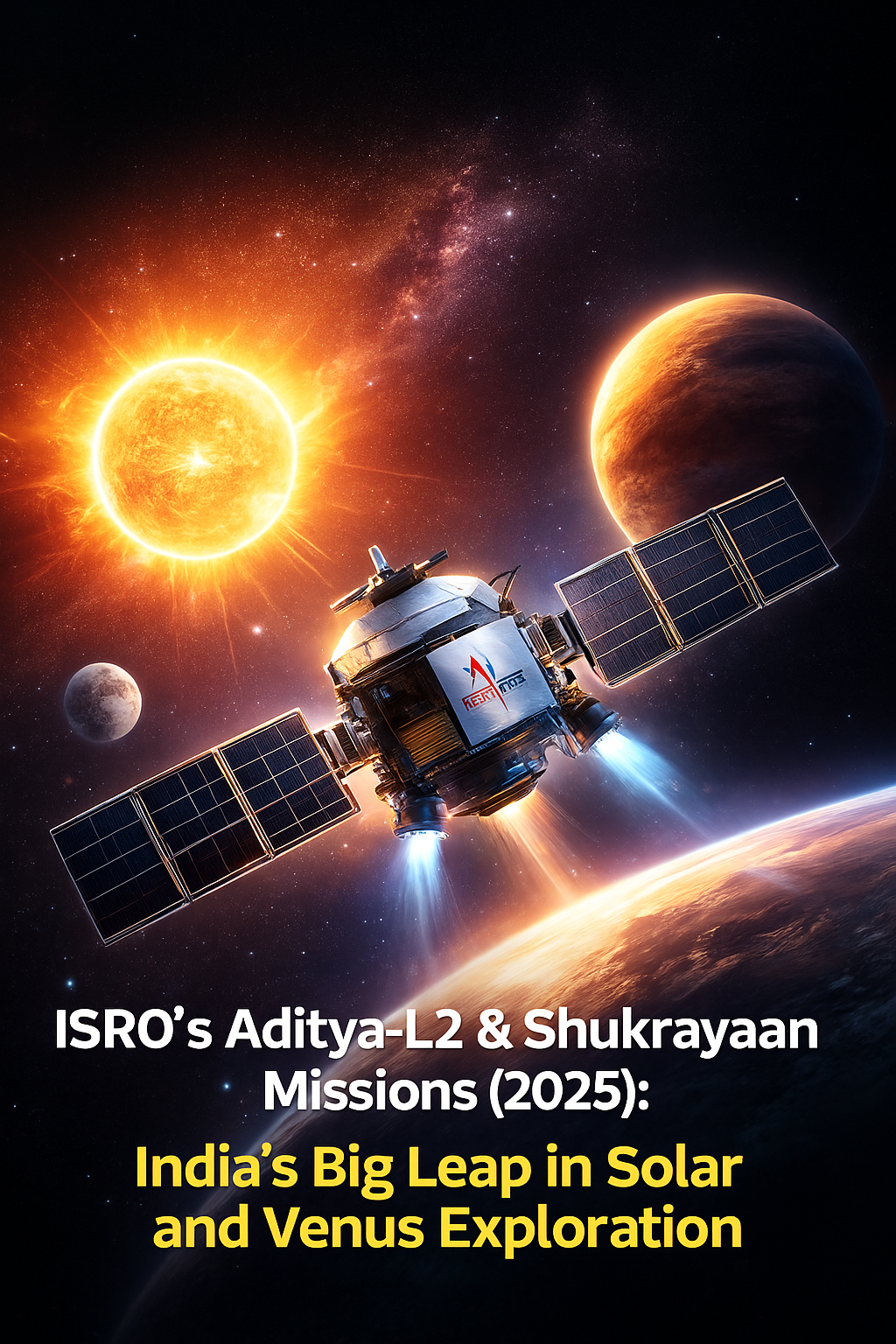
ISRO Aditya-L2 and Shukrayaan Missions 2025 mark a historic milestone in India’s space science journey…
ISRO Aditya-L2 and Shukrayaan Missions 2025 mark a historic step for India in solar observation and Venus exploration.
INDIA is entering a historic phase in space science with ISRO’s Aditya-L2 and Shukrayaan missions, marking a major leap in solar observation and interplanetary exploration. These missions are not just scientific achievements—they represent India’s growing leadership in advanced space technology.
This article explains what these missions are, why they matter, and how they impact India’s future in science, technology, and global space research.
🌞 Aditya-L2 Mission: Studying the Sun Like Never Before
After the success of Aditya-L1, ISRO is preparing Aditya-L2, an advanced solar observatory mission aimed at deeper and more precise study of the Sun.
🔬 Key Objectives of Aditya-L2
- Continuous observation of solar flares and coronal mass ejections
- Improved monitoring of space weather
- Understanding how solar storms affect:
- Satellites
- Power grids
- GPS & communication systems
These findings directly support India’s growing digital and satellite ecosystem, which also connects with broader national changes discussed in 🔗 Big Government Rule Changes in 2026 Affecting Common People.
🪐 Shukrayaan Mission: India’s First Mission to Venus
Shukrayaan is ISRO’s ambitious mission to explore Venus, one of the most mysterious planets in our solar system.
🚀 What Shukrayaan Will Study
- Thick and toxic Venusian atmosphere
- Signs of volcanic activity
- Possible clues about planetary climate evolution
- Comparison between Earth and Venus to understand climate change risks
This mission places India among elite nations capable of deep-space planetary exploration.
🇮🇳 Why These Missions Are a Big Deal for India
1️⃣ Strengthening Scientific Leadership
Aditya-L2 and Shukrayaan elevate India’s position alongside NASA, ESA, and other global space agencies.
2️⃣ Boost to Technology & Innovation
Research from these missions fuels:
- Satellite design
- AI-based data analysis
- Advanced sensors and space materials
This innovation ecosystem also overlaps with digital and financial systems evolving under 🔗 Big Banking Changes in 2026: What Every Account Holder Must Know.
3️⃣ Inspiration for Future Generations
These missions encourage students to pursue careers in:
- Space science
- Engineering
- Artificial intelligence
- Astrophysics
🤖 Role of AI & Data Analysis in These Missions
Both missions rely heavily on AI-driven data processing, handling massive streams of solar and planetary data. This same AI ecosystem is shaping opportunities beyond space research, as explained in 🔗 Best AI Tools to Make Money Online in India (2026).
🌍 Global Impact of Aditya-L2 & Shukrayaan
- Better space weather forecasting helps protect global communication systems
- Climate comparison studies help scientists understand Earth’s future
- Strengthens India’s role in international scientific collaborations
🔮 What This Means for India’s Future
ISRO’s upcoming missions show that India is no longer just a space participant—it is becoming a space innovator. The knowledge gained will influence not only astronomy but also technology, policy, education, and economic planning in the coming decade.
🧠 Final Thoughts
Aditya-L2 and Shukrayaan are more than space missions—they are symbols of India’s scientific confidence and long-term vision. As India prepares for rapid technological and policy changes, these missions reinforce the nation’s readiness to lead on a global stage.
Conclusion: India’s Expanding Space Ambitions
ISRO’s Aditya-L2 and Shukrayaan Missions 2025 clearly show how India is strengthening its position in advanced space science and interplanetary research. While Aditya-L2 will help scientists gain deeper insights into solar activity and space weather, Shukrayaan aims to unlock critical secrets about Venus’s atmosphere and climate evolution. Together, these missions will not only boost India’s scientific capabilities but also enhance its global credibility in space exploration.
As India continues to invest in cutting-edge technology and long-term research goals, such missions will play a crucial role in shaping the country’s future in science, innovation, and education. These efforts also align with other major developments, including Big Banking Changes in 2026 and evolving UPI New Rules 2026, which reflect India’s broader push toward modernization and global leadership. Overall, ISRO’s upcoming missions mark a confident step toward a more technologically empowered India.