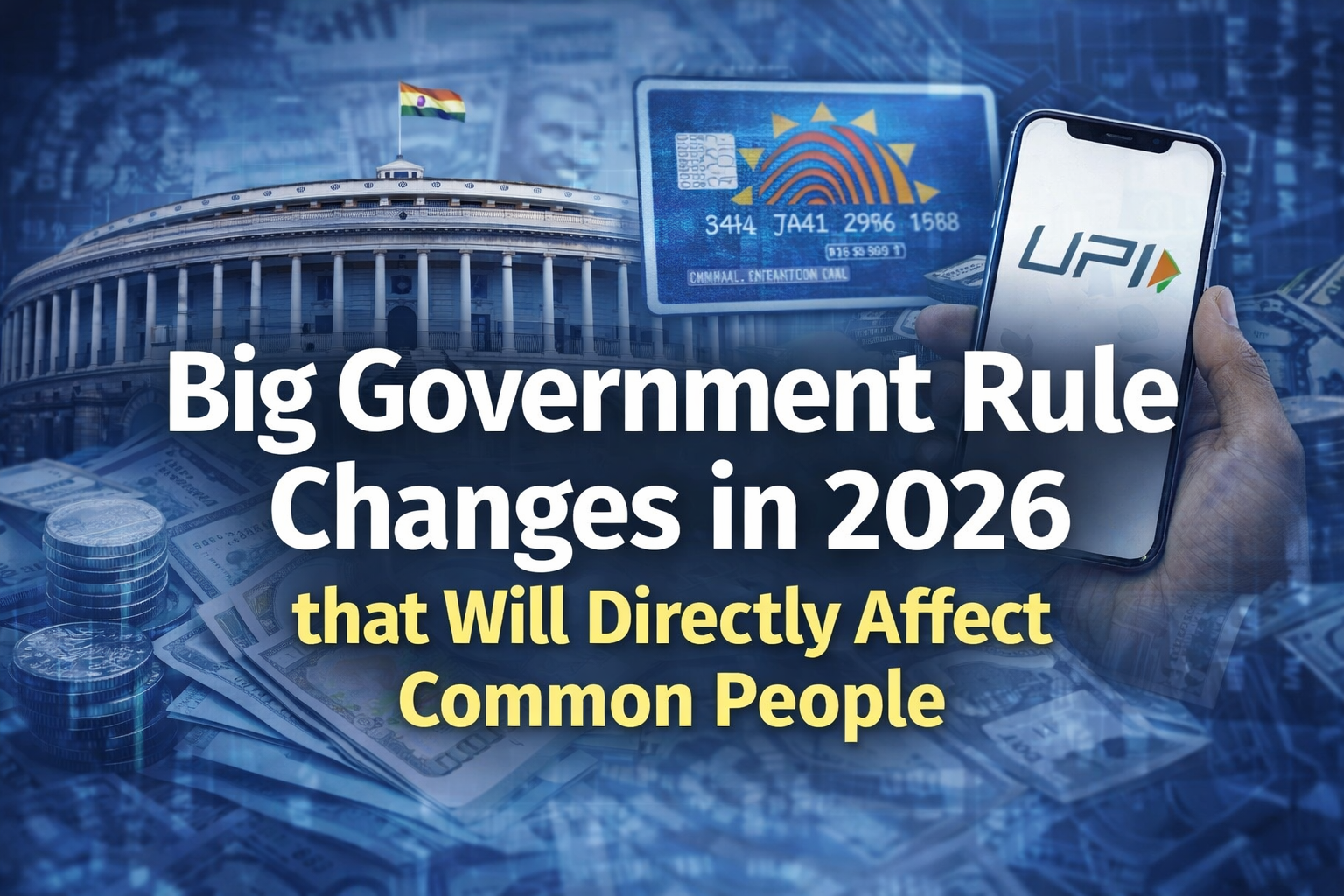
In 2026, the Indian government is expected to introduce several major rule changes that will directly impact the daily lives of common people. These changes may affect bank accounts, digital payments, taxes, subsidies, and financial compliance. Understanding these updates early can help citizens stay prepared and avoid penalties or disruptions.
This article explains the most important government rule changes in 2026 in a clear and simple manner.
1. Stricter KYC Rules for Bank Accounts
What may change:
From 2026, banks are expected to enforce strict KYC compliance across all savings and current accounts Bank Account New Rules 2026
- Mandatory re-KYC for inactive or old accounts
- Aadhaar and PAN linking verification
- Temporary restrictions on accounts with incomplete KYC
How it affects you:
If KYC is not updated on time, your bank account may face transaction limits or suspension.
2. New Rules for Digital Payments and UPI
Digital payment systems like UPI are likely to undergo security and transaction-limit updates. UPI New Rule Update 2026
Expected changes:
- Revised daily transaction limits
- Stronger fraud detection mechanisms
- Faster blocking of suspicious transactions
These steps aim to improve safety but may require users to update apps or verify accounts again.
3. Changes in Savings Account Monitoring
Government and banking regulators are expected to increase monitoring of savings accounts. Savings Account Minimum Balance Rules 2026
Key focus areas:
- Large or unusual transactions
- Long-term idle balances
- Regular compliance reporting by banks
This move is intended to reduce financial misuse and improve transparency.
4. Possible Tax and Reporting Updates
Although no final notification has been issued yet, 2026 may bring minor tax-related reporting changes for individuals.
Possible updates include:
- Better tracking of interest income
- Automated reporting from banks
- Simplified online compliance systems
For most salaried and middle-class individuals, this means better transparency, not higher taxes.
5. Impact on Subsidies and Government Benefits
Government welfare schemes may also be linked more tightly with verified bank accounts.
What to expect:
- Direct Benefit Transfer (DBT) only to fully verified accounts
- Delays if bank details are outdated
- Increased emphasis on Aadhaar-linked accounts
Keeping bank details updated will be crucial to avoid missing benefits.
What Common People Should Do Now
To stay safe and prepared for 2026 rule changes:
- Ensure KYC is fully updated
- Monitor bank statements regularly
- Avoid keeping accounts inactive for long periods
- Follow official bank and government notifications
Final Thoughts
The big government rule changes in 2026 are designed to improve security, transparency, and efficiency. While these changes may require some effort from citizens, staying informed and compliant will help avoid unnecessary stress.
Being proactive today will make 2026 smoother for your finances.