
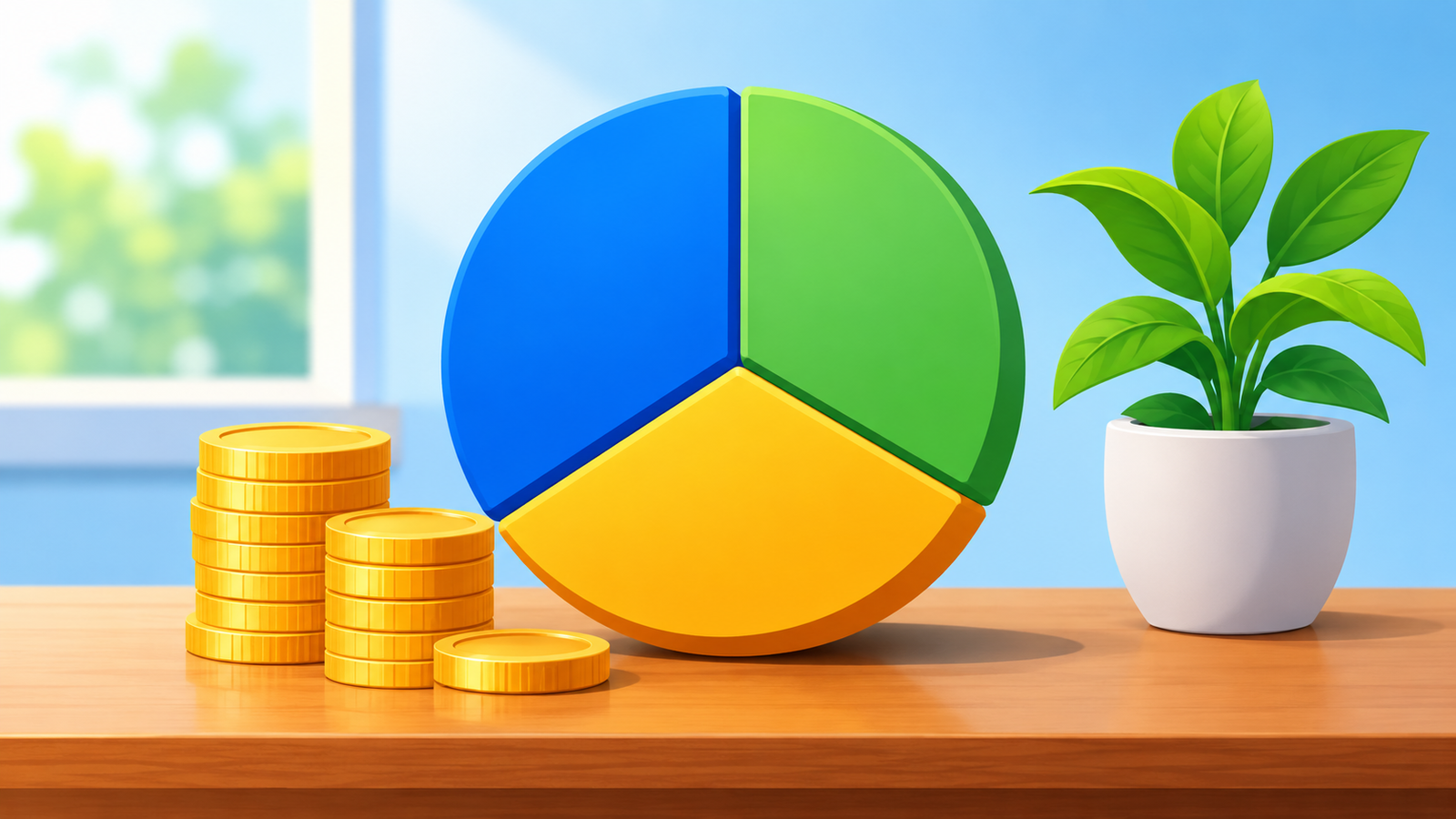
What is asset allocation? It is the way you divide your money between different types of investments, mainly stocks, bonds and cash, so that your plan fits your goals and your comfort with risk. It is one of the first decisions every investor makes, and many experts believe it matters more than picking any single stock or fund.
In this guide you will learn what each building block does, see sample mixes in a table, follow a worked $10,000 example and finish with five simple steps to choose your own mix.
Last updated: October 31, 2026
What Is Asset Allocation?
Asset allocation means deciding what share of your investment money goes into each asset class. An asset class is a group of investments that behave in a similar way, such as shares of companies, loans to governments, or cash in a savings account. If you put 60% in stocks, 35% in bonds and 5% in cash, then 60/35/5 is your asset allocation.
Different asset classes rise and fall at different times. When one is weak, another may hold steady. By mixing them, you try to avoid a plan that depends on a single outcome. This is why asset allocation is closely linked to diversification, the idea of not putting all your eggs in one basket.
The Three Main Building Blocks
Stocks
Stocks are small ownership shares in companies. They have historically offered the highest long-term growth, but their prices can swing sharply from year to year. To understand how they trade, read our guide on how the stock market works. Many stocks also pay money to owners, which we explain in how dividends work.
Bonds
Bonds are loans you give to a government or a company in exchange for regular interest. They are usually calmer than stocks, but not risk-free, because their prices move with interest rates. Our guide on how bonds work explains prices, yields and risks.
Cash
Cash and cash-like savings are the safest and easiest to reach, but they grow slowly and can lose buying power to inflation. Keep your emergency fund here, separate from your investment mix.
Why Asset Allocation Matters
Your mix largely decides how bumpy the ride will be. A portfolio with mostly stocks can grow faster in good years but fall harder in bad ones. A portfolio with more bonds and cash usually falls less, but also grows less. The right balance helps you stay invested during a downturn, and staying invested is what lets compound interest work over many years.
Sample Asset Allocation Mixes
The table below shows three common styles. These are simple illustrations for learning, not recommendations.
| Style | Stocks | Bonds | Cash | Who it may suit |
|---|---|---|---|---|
| Growth | 80% | 15% | 5% | Long horizon, high comfort with swings |
| Balanced | 60% | 35% | 5% | Medium horizon, moderate comfort |
| Conservative | 30% | 60% | 10% | Short horizon, low comfort with swings |
Notice the trade-off: more stocks means higher growth potential and bigger swings. There is no single best mix, only the mix that suits you.
How Time Horizon and Risk Tolerance Shape Your Mix
Time horizon
If you need the money in 30 years, you have time to recover from falls, so a higher share of stocks can make sense. If you need it within 3 years, a stock crash could hurt at the wrong moment, so more bonds and cash are common.
Risk tolerance
This is how you feel and behave when your balance drops. If a 20% fall would make you sell in panic, a lower-risk mix is better, even if it grows more slowly. A plan you can stick with beats a perfect plan you abandon.
A Simple Asset Allocation Example With $10,000
Imagine you invest $10,000 with a 60/35/5 mix. All numbers are made-up illustrations, not real market data.
| Asset | Start | Change in 1 year | After 1 year |
|---|---|---|---|
| Stocks | $6,000 | +10% | $6,600 |
| Bonds | $3,500 | +3% | $3,605 |
| Cash | $500 | 0% | $500 |
| Total | $10,000 | $10,705 |
After one year the mix has drifted. Stocks are now about 61.7% of the total, bonds 33.7% and cash 4.7%. To return to 60/35/5, you would hold about $6,423 in stocks, $3,747 in bonds and $535 in cash. That small adjustment is called rebalancing.
What Is Rebalancing?
Rebalancing means bringing your mix back to its target by selling a little of what has grown and buying more of what has lagged. Many investors review once a year, or when a share drifts more than 5 percentage points from the target. You can also rebalance by sending new money to the lagging asset, which avoids selling. If you invest every month through dollar-cost averaging, this is easy to do.
How to Choose Your Asset Allocation in 5 Steps
- Write down your goal and the year you will need the money.
- Build a small emergency cushion first, outside your investments.
- Be honest about how large a loss you could accept without panic.
- Pick a starting mix from the table above and adjust it slightly for your situation.
- Use simple, diversified funds such as an index fund, and review your mix once a year.
Common Asset Allocation Mistakes
- Putting everything in one stock or one sector.
- Changing the mix after every scary headline.
- Forgetting to rebalance for years.
- Copying someone else’s mix without checking your own goals and timeline.
- Ignoring fund fees, which reduce returns every year.
Frequently Asked Questions
Is there a perfect asset allocation?
No. It depends on your goals, timeline and comfort with risk, and it can change over your life.
How often should I rebalance?
Once a year is enough for most beginners. Checking every day can lead to emotional decisions.
Can a beginner use only one fund?
Yes. Some diversified funds hold stocks and bonds together, which keeps asset allocation simple. The free Investor.gov website is a good place to learn the basics of investing.
Final Thoughts
Asset allocation is not about predicting the market. It is about choosing a mix you understand and can stay with for years. Start simple, review once a year and keep learning. If you are just beginning, our guide to starting to invest with little money is a good next step.
Disclaimer: This article is for general education only and is not financial advice. All examples use made-up numbers. Investments can lose value. Consider speaking with a licensed financial adviser about your own situation.