
Managing money does not have to be complicated. You do not need a spreadsheet, a finance degree, or hours every week. For many people, one simple idea is enough to get started: the 50/30/20 budget rule. It splits your income into three clear parts, so you always know how much is for essentials, how much is for fun, and how much is for your future.
In this guide, you will learn what the 50/30/20 budget rule is, how it works, how to set it up in five easy steps, and when you may need to adjust it.
What Is the 50/30/20 Budget Rule?
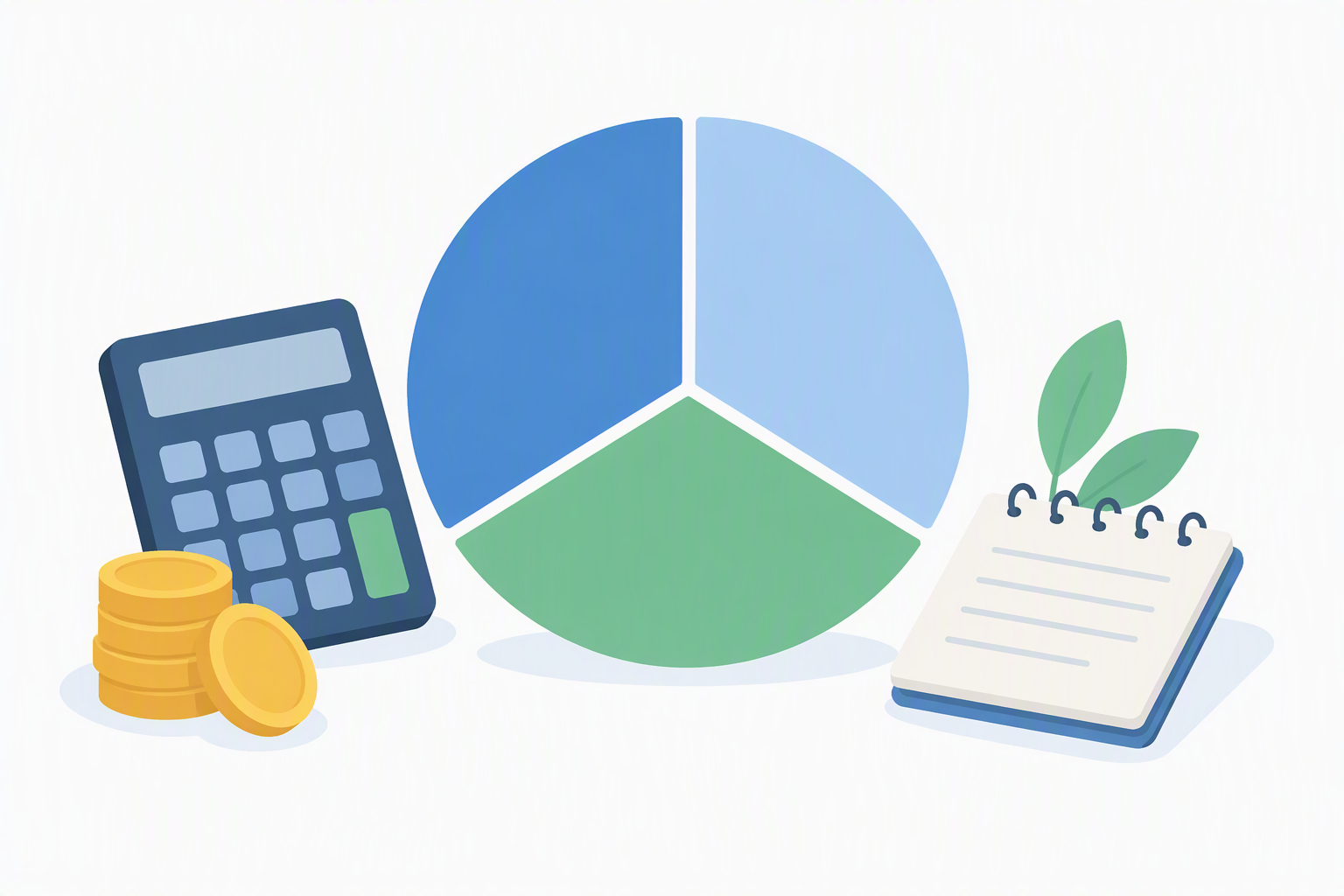
The 50/30/20 budget rule is a simple budgeting method that divides your after-tax income into three buckets: 50% for needs, 30% for wants, and 20% for savings and debt repayment.
The idea was popularized by Elizabeth Warren and her daughter, Amelia Warren Tyagi, in their 2005 book “All Your Worth: The Ultimate Lifetime Money Plan.” Their goal was to give ordinary people an easy framework they could remember and use without complicated tools. You can read a clear overview of the 50/30/20 rule on Experian if you want a second opinion.
The most important word here is “after-tax.” The rule applies to the money that actually reaches your bank account, also called take-home pay, not your salary before taxes and deductions.
How the 50/30/20 Budget Rule Works
Every time you receive income, you mentally divide it into three groups. Each group has a clear job.
50% for Needs
Needs are the expenses you must pay to live and work. If you stopped paying them, your daily life would be seriously affected. Common examples include:
- Rent or home loan payment
- Groceries and basic household items
- Electricity, water, and internet
- Transport to work or school
- Basic health care and insurance
- Minimum payments on loans and credit cards
If your needs take up more than half of your income, that is a useful warning sign. It tells you where to look first when you want to improve your budget.
30% for Wants
Wants are things that make life enjoyable but are not strictly necessary. Common examples include:
- Eating out and ordering food
- Movies, streaming services, and hobbies
- Shopping for clothes and gadgets beyond the basics
- Holidays and weekend trips
A good budget recognizes that fun is part of life. When you plan for wants, you can enjoy them without guilt, and you are less likely to overspend in a moment of weakness.
20% for Savings and Debt Repayment
This is the part that builds your future. It includes:
- Building an emergency fund
- Investing for long-term goals
- Retirement savings
- Paying off debt faster than the minimum payment
If you do not have a safety net yet, start here. Our guide on how to build an emergency fund explains how to do it step by step. Once your emergency fund is in place, you can put more of this 20% into investing and let compound interest work for you over the years.
A Simple 50/30/20 Budget Example
Let us say your take-home pay is $3,000 per month. Here is how the rule divides it:
- Needs (50%): $1,500
- Wants (30%): $900
- Savings and debt repayment (20%): $600
Now imagine your income is $5,000 per month. The same rule gives you $2,500 for needs, $1,500 for wants, and $1,000 for savings and debt. The numbers change, but the method stays exactly the same. This is why the rule is so easy to use at any income level.
To find your own numbers, multiply your monthly take-home pay by 0.50, 0.30, and 0.20.
How to Set Up Your 50/30/20 Budget in 5 Steps
- Find your monthly after-tax income. Use your take-home pay. If your income changes every month, take the average of the last three to six months.
- List your needs. Add up rent, food, utilities, transport, insurance, and minimum loan payments. Compare the total with 50% of your income.
- List your wants. Look at your bank or mobile payment history for the last month and separate the things you chose to buy from the things you had to buy.
- Set your savings and debt goal. Decide where your 20% will go, for example emergency fund first, then investing, then extra debt payments.
- Adjust and repeat. If one bucket is too large, find small ways to reduce it. Review your budget once a month for the first three months, then every few months after that.
A helpful trick is to automate the 20%. Set up an automatic transfer to a savings account on the day your income arrives. When the money moves before you can spend it, saving becomes almost effortless.
Benefits of the 50/30/20 Rule
The rule is popular for good reasons:
- It is simple. You track three groups instead of dozens of categories.
- It is flexible. It is a guideline, not a strict law, and you can adjust it.
- It protects your future. A fixed share goes to savings before everything else.
- It allows enjoyment. Spending on wants is built into the plan, which makes the budget easier to follow for the long term.
- It works for beginners. You can start in minutes with only a calculator.
When the 50/30/20 Rule May Not Work
No budget fits everyone. The rule may need changes in these situations:
- High cost of living. In expensive cities, rent and basic costs alone can take more than 50% of income. As prices rise, as we explained in our article on how inflation quietly eats your savings, the needs bucket can grow faster than your salary.
- Low income. When income is small, there may be little room for wants or savings at first. Even saving a small amount regularly is a strong start.
- Heavy debt. If you carry high-interest debt, you may choose to put more than 20% toward paying it off.
- Irregular income. Freelancers and business owners can use their average monthly income and keep a larger cash cushion.
In these cases you can use a different split, such as 60/20/20 or 70/20/10. The goal is not to follow the numbers perfectly. The goal is to know where your money goes and to save something every month.
Common Mistakes to Avoid
- Using your gross income. Always use your after-tax income.
- Counting wants as needs. A premium phone plan or a new car is often a want, even if it feels necessary.
- Skipping the 20%. Saving “whatever is left” usually means saving nothing. Pay yourself first.
- Never reviewing the budget. Your income and expenses change, so your budget should change too.
- Giving up after one bad month. Overspending once is normal. Simply start again the next month.
Frequently Asked Questions
Is the 50/30/20 rule good for beginners?
Yes. It is one of the easiest budgeting methods to learn because it has only three categories and needs no special tools.
Should I use before-tax or after-tax income?
Use after-tax income, which is your take-home pay. This is the money you can actually spend and save.
Where should the 20% savings go?
A common order is: first build a small emergency fund, then pay off high-interest debt, and then invest for long-term goals. For beginners who want to invest simply, our guide explains what an index fund is and how it works.
What if my needs are more than 50%?
Try to reduce them slowly, for example by lowering utility bills or finding cheaper options for transport and groceries. You can also temporarily lower your wants. If that is not possible, adjust the split to fit your situation and increase your income over time.
Final Thoughts
The 50/30/20 budget rule is not magic, but it gives you a clear starting point. Divide your take-home pay into needs, wants, and savings, automate your savings, and review your numbers regularly. Small, steady habits matter more than a perfect plan. Start with this month’s income, and your future self will thank you.
If you are looking for a simple place to begin, the 50/30/20 budget rule is one of the easiest options. Try the 50/30/20 budget rule for three months, and adjust the numbers until they fit your life.
Disclaimer: This article is for general educational purposes only and is not financial, tax, or investment advice. Your situation is unique, so consider speaking with a qualified financial professional before making financial decisions.