
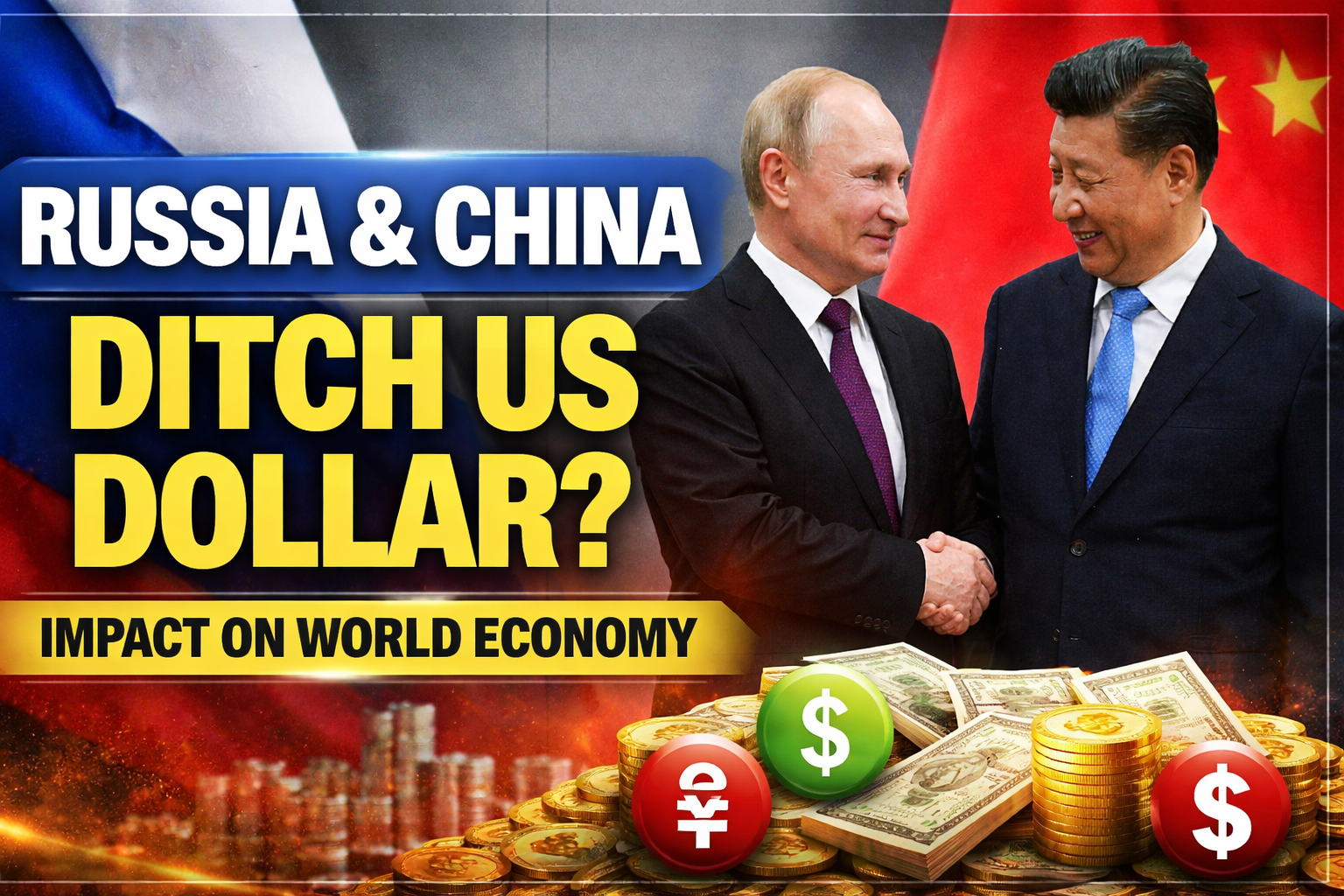
Russia & China Move Away from US Dollar is becoming a major global topic today. In a major shift that could reshape the global financial system, Russia and China have reportedly decided to reduce their dependence on the US dollar in bilateral trade. This move is being seen as part of a broader trend known as de-dollarization.
But what exactly does this mean for the world, and more importantly, how could it affect countries like India? Let’s break it down in simple terms.
What Exactly Happened?
Russia and China have indicated that they will conduct more of their trade using their own currencies instead of the US dollar. Traditionally, most international trade — especially in oil and large-scale transactions — has been dominated by the dollar.
Now, both countries aim to settle payments in their local currencies (Yuan and Ruble), reducing their reliance on the US financial system.
Why Is This Happening?
There are two major reasons behind this shift:
1. Reducing External Pressure
Sanctions imposed by Western countries on Russia have exposed the risks of depending too much on the dollar-based system.
2. Strengthening Economic Independence
By trading in their own currencies, both nations can gain more control over their economies and reduce external influence.
What Is De-Dollarization?
De-dollarization refers to the process where countries reduce their reliance on the US dollar for international trade and reserves.
In simple words, the world is slowly moving towards a multi-currency system instead of depending on a single dominant currency.
Impact on the Global Economy
This shift could have long-term consequences:
- The dominance of the US dollar may gradually weaken
- Global trade rules could evolve
- More countries may start using local currencies
- Financial power may become more distributed
However, it’s important to note that the US dollar is still very strong, and such changes take time.
What Does This Mean for India?
For India, this development presents both opportunities and challenges:
Opportunities:
- India can explore trade in rupees with other countries
- Reduced dependency on the dollar may improve stability
- New trade partnerships may emerge
Challenges:
- Currency fluctuations may increase
- Global uncertainty could impact markets
What Should Individuals Understand?
While this news sounds big, it does not mean the dollar will disappear overnight. Instead, it signals a gradual shift in global economic power.
For individuals, it highlights the importance of understanding global finance and making informed financial decisions.
You can also explore best ways to invest your money during uncertain times
And learn how to protect your savings from inflation
FAQs
1. What is de-dollarization?
De-dollarization refers to reducing dependence on the US dollar in global trade and reserves.
2. Will the US dollar collapse?
No, the dollar is still strong. This is a gradual shift, not an immediate collapse.
Final Thoughts
The move by Russia and China is more than just a trade decision — it reflects a changing global order. While the impact will unfold over time, it clearly signals that the world economy is evolving.
For bloggers, investors, and readers alike, this is an important trend to watch closely. This shift could reshape future global trade patterns and influence economic policies across multiple countries.
Future of Global Currency System
This shift also encourages countries to rethink their financial strategies and explore new economic alliances. It could lead to new financial systems emerging globally. The global financial system is gradually moving toward a multi-currency structure. While the US dollar remains dominant, countries are increasingly exploring alternatives. This shift may not happen overnight, but it signals a long-term change in global economic power. Emerging economies like India could benefit by diversifying trade partnerships and reducing reliance on a single currency.
What De-Dollarization Means for Everyday People
De-dollarization does not mean the US dollar will disappear tomorrow. The dollar is still the most widely used currency in global trade, and changes of this kind usually happen slowly over many years. If you want deeper background, this overview of de-dollarization on Wikipedia explains the history and the main arguments on both sides.
For ordinary savers and investors, the main lesson is to stay prepared. Rising prices can reduce the value of idle cash, so it helps to understand how inflation quietly eats your savings and to learn the basics of simple, diversified investing through our beginner’s guide to index funds. Understanding de-dollarization will not predict the market, but it helps you read the news with more confidence.
This article is for general information only and is not financial advice.